EN
EN
 Italiano
  Deutsch
  Français
  Español
  Polski


Coming to Rome for a long weekend: neighborhoods, timing and arrival tips
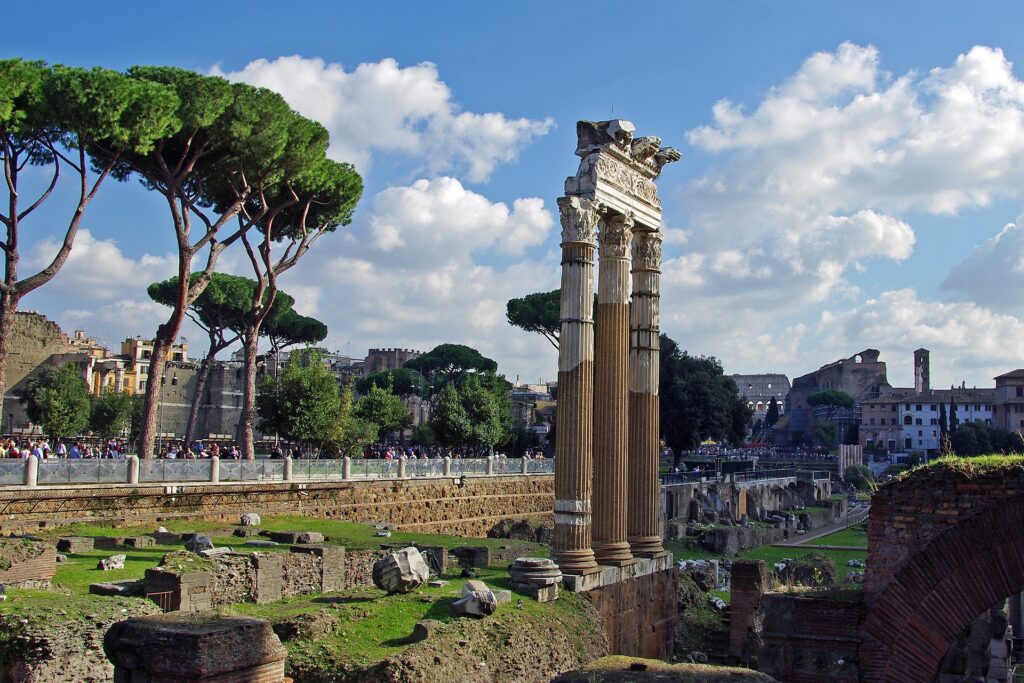
Rome does not reward rushing. It is a city of layers (ancient, medieval, baroque, and contemporary) stacked so densely in certain neighborhoods that a single piazza can contain two thousand years of history within a five-minute walk. A long weekend, meaning three full days or four with arrival and departure, is the minimum that lets you engage meaningfully with that density rather than simply tick off a checklist of landmarks.
This guide is for travelers planning their first or second visit to Rome, arriving by air and trying to make deliberate decisions about where to stay, when to go, and what to prioritize. It is built around the practical reality of how Rome works, not an idealized itinerary that assumes perfect conditions.
Why three or four days is the right length for a first visit
Three days in Rome is not a compromise: it is a useful constraint that forces better decisions. Visitors with ten days tend to try everything and often end up spending significant time transiting between sites. Visitors with three days tend to stay closer to their base, walk more, and end up seeing fewer things more completely.
The argument for four days over three is simple: Rome has no obvious endpoint. The Vatican alone is a full day for anyone who wants to understand what they are looking at. The ancient forums, Palatine Hill, and the Colosseum are another. The baroque churches, the neighborhood markets, the early morning light on the Pantheon: these things do not compress well. Four days give you one day of arrival and orientation, two days of intentional exploration, and one day of returning to places that caught your attention earlier. That rhythm works.
What does not work is attempting to divide three days into six half-days of competing priorities. The city’s geography punishes this: distances that look short on a map often involve hills, cobblestones, uneven surfaces and midday heat that slows everything down. A long weekend in Rome should feel spacious rather than exhausting.
The neighborhoods that define how Rome feels
Where you sleep in Rome changes your experience of the city more than almost any other decision. The most popular central areas (around the Trevi Fountain, the Spanish Steps or Campo de’ Fiori) are convenient but intensely touristic. The streets are crowded at all hours, accommodation is expensive, and the local rhythm of the city is largely absent. For a long weekend, the following three areas consistently produce a better experience
Trastevere: the neighborhood most visitors wish they had stayed in
Trastevere sits on the west bank of the Tiber, across from the historic centre. It is close to the Vatican, within walking distance of Campo de’ Fiori and Testaccio, and far enough from the main tourist corridors to retain a genuinely local character. The neighborhood is known for its narrow medieval streets, terracotta buildings draped with plants, and the kind of restaurant terraces that feel earned rather than staged.
For a long weekend visitor, Trastevere offers something the central tourist zones cannot: a base that is pleasant to return to at the end of the day. The morning market at Porta Portese (Sundays only) is one of Rome’s great experiences. The basilica of Santa Maria in Trastevere, one of the oldest churches in the city, is usually uncrowded and architecturally extraordinary. The neighborhood gets busy in the evenings. It is one of Rome’s most popular dining and aperitivo destinations, but that energy is part of what makes it work as a base.
Testaccio: Rome’s most local district
Testaccio, just south of the Aventino hill, is where Romans who live in Rome eat, shop and spend their weekends. The covered market (Mercato di Testaccio) is a serious food market, not a tourist attraction, and the streets around it are filled with bakeries, butchers and neighborhood bars that have been operating for decades. The area has a strong connection to Rome’s working-class history: it was built around the former slaughterhouse and meatpacking district, and that history is still visible in the architecture and the culture.
For a long weekend visitor, Testaccio is an excellent base for exploring the Aventino, the ancient Appian Way, and the Ostiense district. It is also very well connected to the rest of the city. Accommodation here tends to be less expensive than in the tourist centre while being of comparable or higher quality. The one drawback is that it is quieter at night than Trastevere, which for many visitors is an advantage rather than a limitation.
Prati and the Vatican side
Prati is a residential neighborhood directly north of the Vatican, on the same bank of the Tiber as Trastevere but further north. It was built in the late nineteenth century and has a more grid-like, orderly feel than the medieval neighborhoods across the river. For visitors whose primary interest is the Vatican Museums and St Peter’s Basilica, Prati is the most logical base: morning access to the Vatican before the crowds arrive is a significant advantage when accommodation is ten minutes’ walk away.
Beyond the Vatican connection, Prati has its own character: good restaurants without tourist markups, a lively weekend atmosphere along Via Cola di Rienzo, and proximity to the Castel Sant’Angelo, one of Rome’s most underrated sites. It is not as atmospheric as Trastevere or as local feeling as Testaccio, but it is practical, comfortable and well-positioned for the western part of the city.
What to do when you land at Fiumicino or Ciampino
Rome is served by two airports. Fiumicino (FCO), the main international hub, is located about 32 kilometers southwest of the city centre. Ciampino (CIA), primarily serving budget carriers, is roughly 15 kilometers southeast of the centre. Both airports require a transfer into the city, and how that transfer is handled shapes the energy you have for the rest of the arrival day.
The most common mistake is trying to be too efficient immediately after landing. Travelers often land, transfer quickly and then go directly to a major site (the Colosseum, the Vatican, the Trevi Fountain) before checking in or eating properly. This approach consistently results in the worst first impressions of Rome: tired, hungry, disoriented, and standing in a queue that is longer than expected.
A more effective pattern is straightforward. From Fiumicino, Terravision operates a direct coach transfer to Roma Termini and Tiburtina, giving you a clear, fixed-price connection with no navigation required after landing. From Ciampino, the same direct transfer to Termini is available. Once in the city, the priority is reaching your accommodation, leaving luggage, eating something real and then exploring on foot at a pace that matches your actual energy level. The first evening in Rome (a walk, a local restaurant, an early gelato) is often more memorable than a visit to a major site would have been.
Timing your long weekend: spring, autumn and summer compared
Rome is a year-round destination, but the experience varies significantly by season. For a long weekend, the timing of your visit affects crowds, temperature, opening hours, and the general rhythm of the city.
Spring, specifically April through early June, is widely considered the best window for a Roman long weekend. Temperatures are comfortable (typically 16–24°C), the light is exceptional, terraces and outdoor markets are active, and the city is alive without being at peak tourist saturation. April brings the azaleas on the Spanish Steps and the light quality that makes Rome’s baroque architecture look exactly as painters captured it.
Autumn (September through November) is the other strong window. After the August exodus of Roman residents, the city returns to itself in September with slightly reduced crowds, warm temperatures and a full cultural programme. October is often the most underrated month in Rome: mild, quiet by Roman standards, and full of evening programming. November brings rain but also the lowest prices and the most authentic local atmosphere.
Summer (July–August) is the most demanding time for a Rome long weekend. Temperatures regularly exceed 35°C; the tourist density is at its annual peak, and many Roman residents leave the city for the coast or mountains. Visiting in summer requires adjusting your programme to the heat early starts, a proper pause between 13:00 and 17:00, and evening exploration rather than full-day itineraries.
What to prioritize and what to skip on a short trip
The hardest decision for a Rome long weekend is not what to include but what to exclude. Every major site in Rome is genuinely worth seeing : the difficulty is that there are forty of them, and a long weekend only accommodates six to ten with any depth. The following priorities apply consistently across first and second visits:
- The Colosseum and Palatine Hill: book tickets online at least a week in advance. The queue without a booking is a significant time cost.
- The Vatican Museums and Sistine Chapel: pre-booking is essential. Early entry tickets (opening time, 09:00) or late afternoon sessions avoid the peak crowds. Allow four to five hours.
- The Pantheon: free to enter in the morning for prayer (before 09:00), ticketed from 09:00 onwards. The building is best appreciated early, before it fills.
- A neighbourhood market: Mercato di Testaccio (daily except Sunday) or Campo de’ Fiori (mornings). Both ground the visit in how the city actually functions day to day.
- One baroque church beyond the obvious: Santa Maria della Vittoria (Bernini’s Ecstasy of Saint Teresa), Sant’Ignazio di Loyola (trompe-l’oeil ceiling), or San Luigi dei Francesi (three Caravaggio paintings). All are free and rarely crowded.
What to skip on a short trip: the Borghese Gallery requires advance booking for a fixed time slot that may not suit your schedule; save it for a longer visit. The catacombs require significant travel time for a narrow experience. And the Spanish Steps, while beautiful, are best seen in passing rather than as a destination.
What travellers consistently underestimate about Rome
The walking distances. Rome looks compact on a map, but it is not a flat city. The Aventino hill, the Janiculum, the Capitoline, these are real hills with real gradients, and a day that involves three or four major sites often covers eight to twelve kilometers on foot, much of it on uneven cobblestones. Comfortable, broken-in shoes are not optional.
The importance of early mornings. Rome at 07:00 or 08:00 is a different city from Rome at 10:30. The light is extraordinary, the streets are quiet, and the major sites (the Pantheon square, the forums, Trastevere) can be experienced without crowds. Visitors who sleep through the morning consistently miss the best hours.
The value of doing less. The most enjoyable Rome long weekends are almost always those where the itinerary was deliberately loose: two or three anchor points per day and space between them to follow whatever looked interesting. Rigid minute-by-minute planning works against the nature of the city, which rewards the unplanned detour and the unexpected courtyard more than it rewards efficient point-to-point navigation.
FAQ
Is three days enough to see Rome properly?
Three full days in Rome is enough for a meaningful visit to the most important sites and a genuine sense of the city’s character, provided the programme is focused rather than overloaded. The most effective approach is to concentrate on two or three areas per day rather than trying to cross the city multiple times.
What is the best neighborhood to stay in for a first visit to Rome?
For most first-time visitors, Trastevere offers the best combination of atmosphere, location, and value. It is close to the Vatican, within walking distance of the historic centre, and pleasant to navigate in the evening after a day of sightseeing. Testaccio is the better choice for travelers whose primary interest is food culture and local life. It is less touristic than Trastevere and better connected to the southern archaeological sites. Prati is the most practical choice for visitors centering their trip on the Vatican and Castel Sant’Angelo.
How do I get from Fiumicino or Ciampino airport to the city centre for a long weekend trip?
The most straightforward option from both airports is a direct coach transfer to Roma Termini, the city’s main rail and transport hub. Terravision operates this service from both Fiumicino and Ciampino with fixed pricing, regular departures and a direct connection that requires no changes or navigation decisions after a flight. From Termini, all three recommended neighborhood bases ( Trastevere, Testaccio and Prati) are reachable by metro, tram or a short taxi. Pre-booking the transfer before your flight removes one decision from a busy arrival day and ensures you have a guaranteed seat on the next available departure, including in cases of minor flight delays.
Explore Rome airport transfers

 Rides approx. every 60mins
 Journey time: 40mins
 Free luggage
 No Booking fee

Rides approx every 20 mins
Journey time: 45 mins
Free Luggage
No Booking fee

What are the best airport transfer options from Rome airports ?
October 6, 2026
First Trip to Europe: The transfer decisions that shape your whole journey
September 29, 2026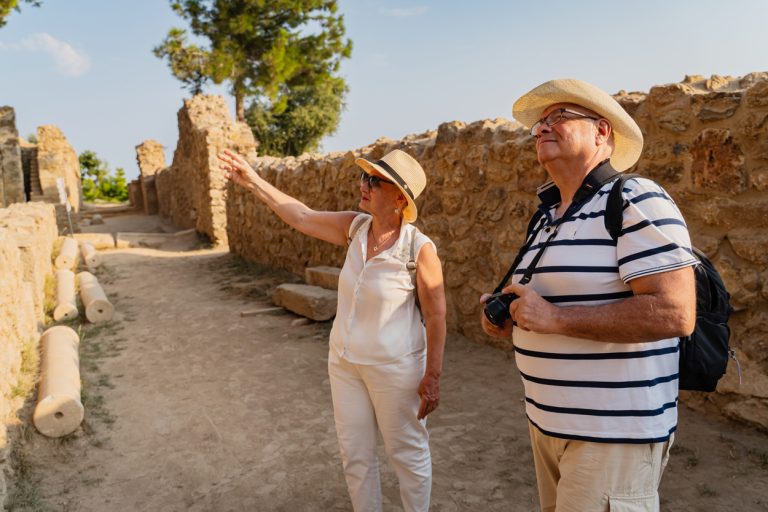
Rome with elderly parents: how to plan a family trip
September 22, 2026
The €10 upgrade that changes how private transfer to Rome begins
September 22, 2026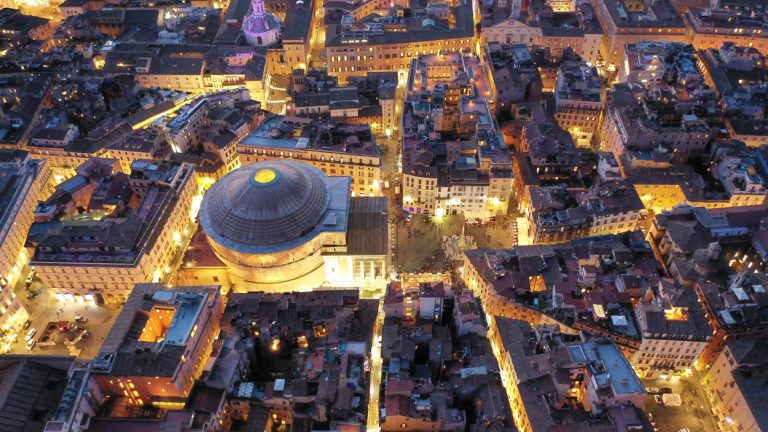
Rome at Night: How to arrive after 10pm without stress
August 26, 2026
Business travel to Rome: how to arrive ready, not exhausted
August 26, 2026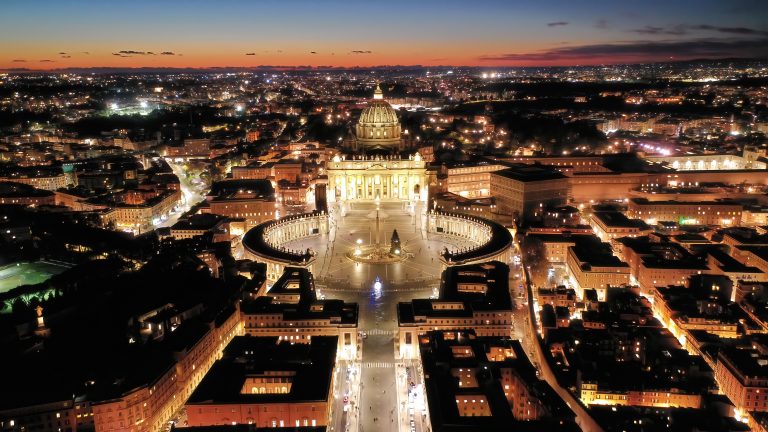
Solo female travel in Rome: arriving safely and confidently
July 29, 2026
Rome airport to city time: how to arrive when you have a reservation that evening
July 29, 2026
Your Terravision transfer goes even further: Discover TerraFast Priority
June 17, 2026