EN
EN
 Italiano
  Deutsch
  Français
  Español
  Polski


Travel tips in Europe: small luxuries that make a big difference
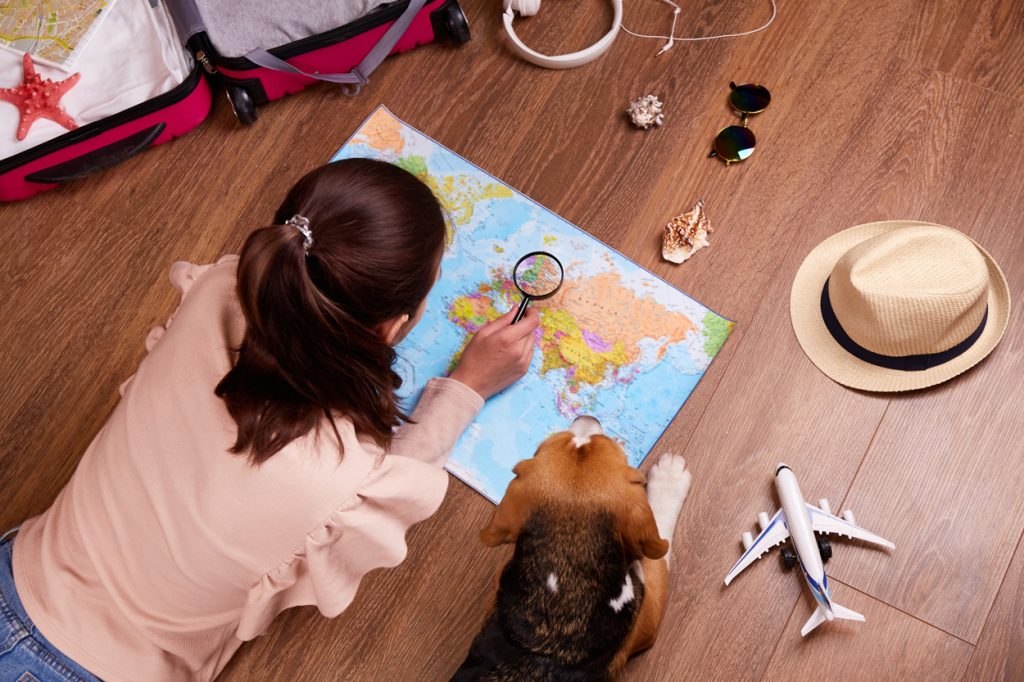
The best travel upgrades are rarely the expensive ones. A business class seat is pleasant. A suite at a five-star hotel is pleasant. But neither of those things changes the fundamental quality of a trip the way that a few well-placed small decisions do.
The transfer that drops you at the door instead of the station. The restaurant booked two days in advance instead of walked into hopefully. The offline map downloaded before the flight. These are not glamorous. They do not photograph well. But they are the things that experienced European travellers do consistently, because they know what happens when you do not.
This is a list of the ones that actually move the needle.
What a small luxury actually is
A small luxury is not a cheaper version of an expensive thing. It is a decision that removes a specific friction at a moment when friction costs you more than money.
It is the difference between arriving at a hotel with energy left and arriving depleted. Between a first evening that feels like the trip has started and one that feels like an extension of the journey. Between spending the first 30 minutes in a new city finding your bearings and spending them already in them.
The defining characteristic is that the cost is low and the return is disproportionate. Not every upgrade works that way. Most expensive ones do not. The ones that do tend to be small, practical, and invisible once they have worked: you do not notice them because they removed something that would otherwise have been noticeable.
Before you leave: the upgrades that cost nothing
Several of the best travel upgrades are free. They are just decisions made in advance rather than on the day.
- Download offline maps for every city you visit. Google Maps and Maps.me both work without data once downloaded. Airport data roaming is slow and unpredictable. An offline map means you can navigate from the moment you land.
- Save your hotel address as a contact in your phone, not buried in an email. The moment you need it is usually the moment your inbox is slowest to load.
- Check in online if your airline offers it. It takes two minutes and removes the airport check-in queue entirely.
- Research one good restaurant per dinner and make a reservation. Not every meal, just the ones that matter. The best places in most European cities are booked several days in advance. Walking in on the night is a different restaurant experience.
- Email your hotel if you are arriving late. Most properties handle late arrivals well, but a note in advance means your room is flagged and the night staff are expecting you.
The arrival: where small decisions have the biggest impact
The arrival is where most European trips are either set up well or not. It is also where travellers are at their most tired, their least resourceful, and their most likely to make a decision they would not make at full capacity.
The airport-to-city transfer is one of the most commonly underthought parts of any trip. Most people book a flight, book a hotel, and assume the bit in between will sort itself out. It usually does. But sorting itself out often means 30 minutes at a taxi rank, a luggage-laden metro journey, or a bus that requires change you do not have.
For Rome specifically, the Terravision coach from Fiumicino or Ciampino airports to Roma Termini is the efficient, affordable answer to the airport leg. What many travellers do not plan is the segment after that, from Termini to the hotel. TerraFast covers it: a private driver waiting at a confirmed meeting point near the coach drop-off, luggage handled, direct journey to the hotel door, fixed price of 10 euros. Booked at the same time as the coach ticket, confirmed by email before departure.
Those 10 euros are among the highest return travel spends on the list. Not because the car is luxurious, but because it removes the single most draining part of a Rome arrival at the moment when you are least equipped to deal with it.
On the ground: how to move through a European city better
Once you are in a European city, a few habits separate people who move through it well from those who spend half the day navigating.
- Buy a multi-day transport pass on day one. In cities with good public transport (Paris, Berlin, Lisbon, Vienna, Amsterdam), a weekly pass costs less than daily tickets and removes the decision-making from every journey.
- Use a local SIM or an international data plan rather than relying on Wi-Fi. Free city Wi-Fi is rarely reliable. A working data connection makes the difference between navigating confidently and standing outside a restaurant trying to load the map.
- Walk more than you plan to. European cities are denser than they look and the streets between major sites are often the best part. Budget walking time rather than filling every gap with transport.
- Leave one afternoon unplanned. The best things that happen on European trips tend to happen in unscheduled time. A market you walk past, a neighborhood you follow into, a conversation that leads somewhere.
Travel tips in Europe : the ones worth paying for
Not every small luxury is free. Some cost money but return more than they cost in time, energy, or experience.
- Priority museum entry. In cities like Rome, Florence, Paris, and Barcelona, timed entry tickets for the major sites are worth buying weeks in advance. The difference between walking past a two-hour queue and walking straight in is not a small thing when you have limited days.
- A private transfer for the last mile. As above for Rome, but the principle applies to any city where the airport transfer drops you somewhere that is not the hotel. The gap between the station and the door is where most of the friction lives. Closing it with a pre-booked car is one of the cheapest meaningful upgrades available.
- One genuinely good meal per city. Not every meal. One. The places that require a reservation, charge fairly for what they do, and represent the city’s food culture rather than its tourist economy. The cost difference between a good meal and a mediocre one in most European cities is smaller than people expect.
- Fast Track at busy airports. Not always available, not always worth it. At Fiumicino in Rome, Heathrow in London, or Charles de Gaulle in Paris during peak summer, a Fast Track lane through security or passport control can save 30 to 45 minutes. At 10 to 15 euros where available, the maths are straightforward.
- A good travel pillow for overnight trains. Low-cost, high-return on any journey that involves sleeping upright. The quality of the night determines the quality of the next day.
Travelling solo in Europe : airport errors that cost time, money and confidence
September 29, 2026
Rome with elderly parents: how to plan a family trip
September 22, 2026
Planning a trip? Here’s the best time to visit Europe
May 19, 2026
Digital nomad Europe – best cities for remote workers based on airport connections
May 12, 2026
How to stay comfortable during long haul travel
May 6, 2026
What time do I need to be at the airport
April 28, 2026
Tips for a smooth trip when you travel with kids
March 24, 2026