EN
EN
 Italiano
  Deutsch
  Français
  Español
  Polski


What is the Italian capital of culture 2026?
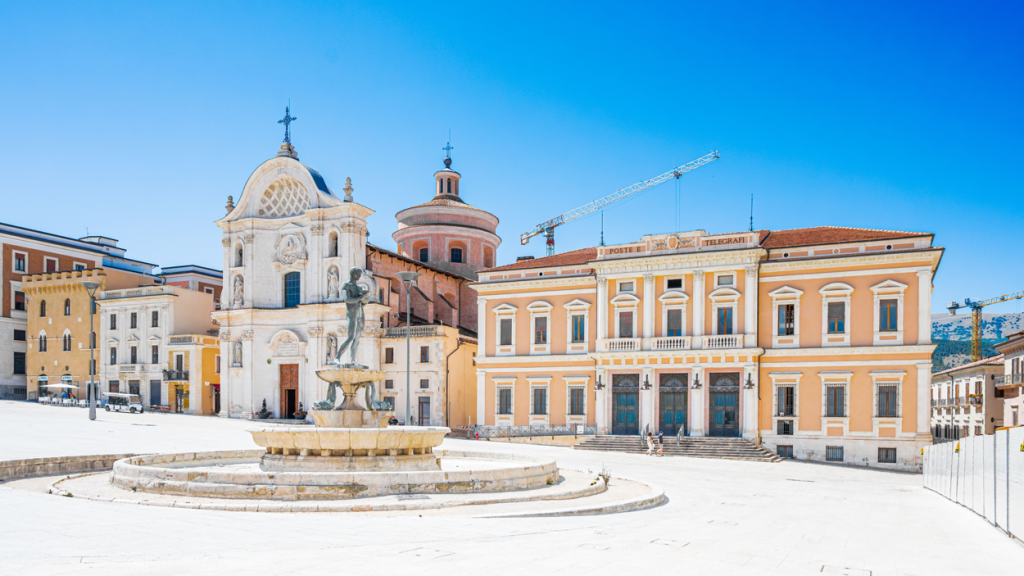
Tucked away in the heart of central Italy, L’Aquila is stepping into the global spotlight as the Italian capital of culture 2026. Once known mainly for its medieval heritage and the devastating 2009 earthquake, the city is now a powerful symbol of rebirth, creativity, and cultural revival.
For tourists seeking authentic Italian experiences beyond crowded destinations like Rome or Florence, L’Aquila offers something rare: a place where history, resilience, and innovation meet. With a packed cultural calendar and renewed infrastructure, 2026 is set to be the perfect moment to discover this rising destination
What is the Italian capital of culture 2026?
The Italian capital of culture is a national initiative launched by the Italian government to promote cultural heritage, support local economies, and encourage tourism in lesser-known cities.
Each year, one city is selected based on its cultural vision, development plans, and ability to showcase Italy’s artistic identity.
L’Aquila’s selection for 2026 is deeply meaningful. The city presented a compelling vision centered on rebirth through culture, highlighting:
- Its remarkable recovery after the 2009 earthquake
- A rich historical and artistic heritage
- A strong commitment to sustainable and inclusive tourism
This recognition positions L’Aquila not only as a cultural destination but also as a symbol of resilience on a global stage.
Discover L’Aquila : a city reborn
Located in the Abruzzo region, surrounded by mountains and national parks, L’Aquila combines natural beauty with centuries of history.
A powerful story of resilience
In 2009, a devastating earthquake struck the city, causing significant damage to its historic center. Over the past decade, extensive restoration efforts have transformed L’Aquila into one of Italy’s most inspiring comeback stories.
Today, visitors can witness a city that has not only rebuilt itself but reimagined its future through culture and community.
A blend of history and modern revival
Walking through L’Aquila feels like stepping into a living museum:
- Elegant medieval and Renaissance buildings
- Restored churches and palaces
- Contemporary cultural spaces and art initiatives
This mix creates a unique atmosphere where tradition meets innovation.
Top things to see and do in L’Aquila
L’Aquila offers a wide range of attractions for curious travelers. Here are some must-see highlights:
- Historic center – beautifully restored squares and streets
- Basilica of Santa Maria di Collemaggio – a masterpiece of Abruzzese Romanesque architecture
- Forte Spagnolo – a massive 16th-century fortress
- Fountain of the 99 spouts – a symbolic and iconic landmark
- Museums and cultural venues – showcasing art, history, and local traditions
Hidden gems tourists shouldn’t miss
Beyond the main attractions, L’Aquila rewards those who explore deeper:
- Quiet alleys with local artisan shops
- Panoramic viewpoints overlooking the Apennine mountains
- Nearby Gran Sasso National Park, perfect for hiking and nature escapes
Events and experiences for 2026
As the Italian capital of culture 2026, L’Aquila will host an exciting lineup of events designed to attract both national and international visitors.
The program is expected to include:
- International art exhibitions
- Music festivals and live performances
- Theater and cultural storytelling events
- Food and wine experiences celebrating Abruzzo cuisine
These events will not only highlight local traditions but also connect L’Aquila with global cultural networks.
Why visit L’Aquila in 2026
Timing your trip to L’Aquila in 2026 offers unique advantages.
- A city in transformation : fully revitalized and ready to welcome visitors
- Fewer crowds : compared to Italy’s major tourist hubs
- Authentic experiences : genuine local culture without mass tourism
FAQ
What does Italian capital of culture mean?
It is a yearly title awarded to a city that promotes cultural development and tourism through events and initiatives.
Is L’Aquila safe to visit?
Yes, the city has undergone extensive reconstruction and is safe for tourists.
How many days do you need in L’Aquila?
A 2–3 day stay is ideal to explore the city and nearby nature.
What makes L’Aquila unique compared to Rome or Florence?
It offers a more authentic, less crowded experience with a strong focus on cultural rebirth.
Are events free or ticketed?
Many events are expected to be free, while major exhibitions or performances may require tickets.