EN
EN
 Italiano
  Deutsch
  Français
  Español
  Polski


Rome with elderly parents: how to plan a family trip
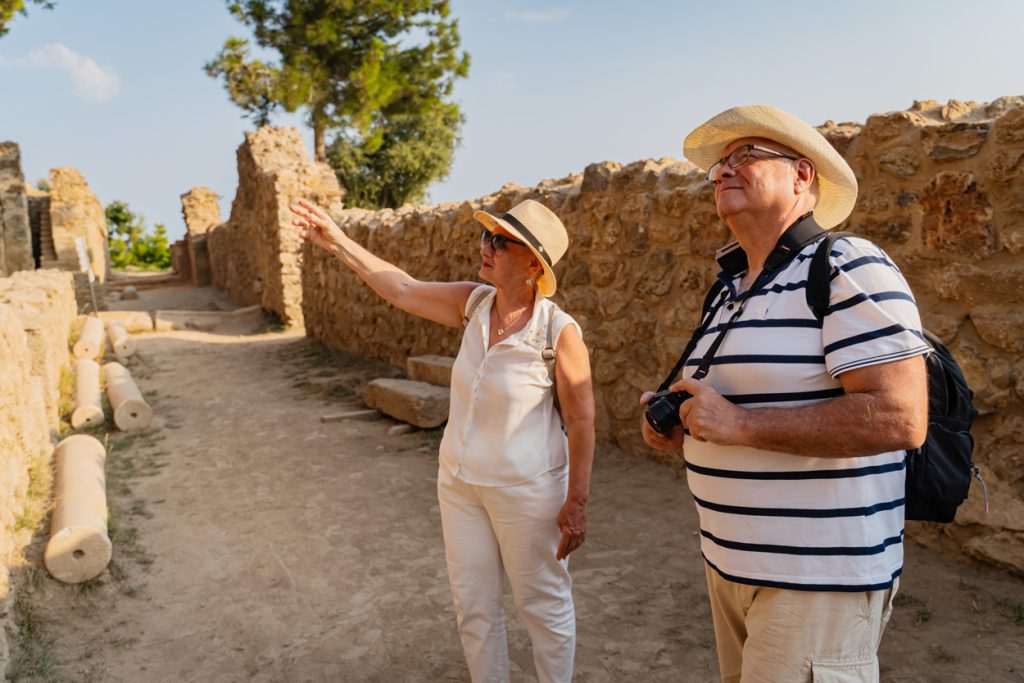
Taking your parents to Rome is one of those ideas that sounds complicated until you actually plan it. The city is large, the streets are cobblestoned, the airport is outside the city, and the transfer from the plane to the hotel door involves more steps than a weekend in Paris.
And yet Rome with elderly parents works extremely well when the logistics are sorted in advance. The city has extraordinary things to offer people who have the patience and the context to appreciate them properly. A 68-year-old standing in front of the Pantheon for the first time is experiencing something different than a 28-year-old doing the same thing. That experience deserves a good arrival.
Why Rome works well for multigenerational travel
Rome is not a city built for speed. It rewards sitting down, looking up, taking the long route, stopping for coffee at 11am and again at 4pm. That rhythm suits a multigenerational group better than almost any other European capital.
The density of things worth seeing is exceptional. In most neighborhoods you can walk for 20 minutes and encounter more history than some countries contain. That means a morning that covers relatively little ground can still feel full. Your parents are not missing out by moving at a different pace from a solo backpacker. They are seeing Rome the way it is meant to be seen.
The food culture also helps. Meals in Rome are long, generous, and social. A two-hour lunch is not an indulgence; it is how the city operates. For a family group, that built-in rest in the middle of the day is a feature rather than a compromise.
What requires more thought than a solo trip is the infrastructure: how you get from A to B, where you sleep, and above all how you handle the arrival. Get those decisions right and the rest takes care of itself.
The arrival: the one-part worth over-planning
Most of what can go wrong on a trip Rome with elderly parents goes wrong in the first two hours. Not because Rome is difficult, but because the airport-to-hotel journey involves a sequence of decisions that are easy to get right when planned in advance and genuinely tiring to figure out on the day with a group.
The journey from Fiumicino to a Rome hotel has three segments: the airport itself, the transfer to the city, and the stretch from the drop-off point to the hotel door. Each one is manageable. Together, improvised, with parents who have been travelling since 6am, they add up.
At the airport: if anyone in the group has difficulty walking long distances, special assistance can be requested through the airline at the time of booking. Fiumicino provides escort service and wheelchair support at no cost. This is not about disability; it is about not walking the full length of Terminal 3 with hand luggage after a two-hour flight.
At the station end: this is where the decision matters most. Roma Termini at any hour is busy, slightly confusing on a first visit, and surrounded by streets that are livelier than a tired family group wants to navigate. Sorting the Termini-to-hotel segment before departure removes that variable entirely.
From Fiumicino to the hotel: what Rome with elderly parents actually requires
The Terravision coach from Fiumicino to Roma Termini is the most practical and affordable option for the airport leg. It is direct, bookable in advance, and the journey takes around 45 minutes. For a family group it works well: everyone boards together; luggage goes in the hold, and the journey is straightforward.
The segment from Termini to the hotel is where TerraFast changes the experience. A private electric car, a driver waiting at a confirmed meeting point near the coach drop-off, luggage handled, and a direct journey to the hotel address. No one has to work out which metro line or drag a suitcase across the station. Your parents step off the coach and into a car that is already there for them.
For a family group travelling to Rome with elderly parents, this matters more than it would for a solo traveler. The metro with luggage and a group is a project. Finding the taxi rank on the right side of Termini is a minor navigation challenge that nobody needs after a flight. TerraFast closes that gap for 10 euros, booked at the same time as the airport coach, with the driver’s name and meeting point confirmed by email before you fly.
If the group includes someone with significant mobility difficulty, an airport taxi directly from Fiumicino to the hotel (fixed tariff of 50 euros for central Rome) removes the Termini stop entirely and is also a strong option. The direct taxi covers the whole journey in one vehicle with no intermediate stop.
Choosing where to stay
Hotel choice for a trip Rome with elderly parents deserves more thought than it gets on most booking sites. A few things that matter more in this context than for a solo trip:
- A lift. Many Rome hotels are in historic buildings with no lift or a very small one. Confirm this directly with the property before booking, not from the listing description which often omits it.
- Ground floor or low floor rooms. Even with a lift, a ground floor room is worth requesting for anyone who finds stairs difficult after a long day.
- A neighborhood with paved streets nearby. The cobblestones of Trastevere and the tighter parts of the centro storico are beautiful but genuinely hard going with tired legs. Prati, the area around Piazza Venezia, and Via Veneto have more paved surfaces within walking distance of the hotel.
- A good restaurant within easy reach. One of the pleasures of Rome with elderly parents is a long dinner close to the hotel. Not having to organize transport back late in the evening is a real convenience.
- Air conditioning. Rome in summer is hot in a sustained way that affects older travelers more than younger ones. Non-negotiable between June and September.
How to pace the trip without losing what makes Rome worth visiting
The temptation with Rome with elderly parents is to plan a lighter version of a Rome trip. Fewer sites, shorter days, less walking. That instinct is understandable but slightly misses the point. The goal is not to see less. It is to see the right things in a way that does not drain everyone by day two.
A few principles that experienced multigenerational travelers use:
- Morning for the major sites, afternoon for the neighborhood. The Vatican, the Colosseum, and the Borghese Gallery all benefit from morning visits when energy is high and crowds are slightly lighter. The afternoon works well for a piazza, a slow walk, and a long aperitivo.
- Book the big sites well in advance. The Vatican Museums and the Borghese Gallery require timed entry tickets and sell out weeks ahead. Having these confirmed before departure means no queuing on the day and a predictable schedule.
- Use taxis and private transfers for anything that involves distance or luggage during the trip. Rome taxis are metered and reasonably priced for short journeys. Spending 8 euros to get across the city rather than 30 minutes on a bus is a good exchange when energy is the limiting resource.
- Leave one full morning unplanned. Some of the best moments in rome with elderly parents happen when there is no agenda: a market, a church you walk into by accident, a coffee that turns into an hour of watching the square.
- Eat where the locals eat at lunch. The tourist restaurants near major sites are expensive and mediocre. A 10-minute walk finds places where a full lunch for four costs less and tastes significantly better. Your parents will notice the difference.
FAQ
Can TerraFast accommodate a group of four with luggage?
TerraFast uses private electric vehicles sized for the standard family group with luggage. When booking, you provide the details of your party so the right vehicle is assigned. A group of four adults with suitcases is a typical TerraFast booking. The driver handles the luggage at the meeting point and loads the vehicle. If your group is larger or has an unusual amount of luggage, it is worth noting this at the time of booking, so the transfer is arranged accordingly.
What is the best time of year to visit Rome with elderly parents?
April, May, October, and early November are the most comfortable months for a trip Rome with elderly parents. Temperatures are mild, the city is busy but not at peak summer density, and most sites are fully operational. July and August are hot enough to be genuinely tiring, particularly for anyone who feels the heat. December and January are quiet and cool, which suits some travelers well, though a few attractions reduce their hours. Easter is worth avoiding unless it is specifically meaningful for the group: the city is at its most crowded and prices are high.
Are Rome’s main attractions manageable for someone who tires easily?
Yes, with a little planning. The Vatican Museums have a specific accessible entrance and offer seating throughout. The Colosseum has lift access to most levels. The Borghese Gallery is compact and fully manageable in 90 minutes with a timed entry ticket. Where people tire is not usually at the sites themselves but in the journey between them. Using taxis rather than public transport for longer distances, and building a proper break into the middle of the day means most people can visit two or three things per day comfortably without feeling depleted by dinner.
Explore Rome airport transfers

 Rides approx. every 60mins
 Journey time: 40mins
 Free luggage
 No Booking fee

Rides approx every 20 mins
Journey time: 45 mins
Free Luggage
No Booking fee

What are the best airport transfer options from Rome airports ?
October 6, 2026
Travelling solo in Europe : airport errors that cost time, money and confidence
September 29, 2026
First Trip to Europe: The transfer decisions that shape your whole journey
September 29, 2026
The €10 upgrade that changes how private transfer to Rome begins
September 22, 2026
Rome at Night: How to arrive after 10pm without stress
August 26, 2026
Business travel to Rome: how to arrive ready, not exhausted
August 26, 2026
Travel tips in Europe: small luxuries that make a big difference
July 31, 2026
Solo female travel in Rome: arriving safely and confidently
July 29, 2026
Rome airport to city time: how to arrive when you have a reservation that evening
July 29, 2026
Coming to Rome for a long weekend: neighborhoods, timing and arrival tips
June 23, 2026
Your Terravision transfer goes even further: Discover TerraFast Priority
June 17, 2026