EN
EN
 Italiano
  Deutsch
  Français
  Español
  Polski


The cheapest way to get from Venice to Treviso airport
Most guides to this route are written backwards, explaining how to get from Treviso Airport into Venice for travellers who just landed. Far fewer explain the direction that actually causes stress: leaving Venice to catch a flight out of Treviso Antonio Canova Airport (TSF). That trip has its own logic. Venice’s historic centre has no road access, so every departure starts with a walk or a boat before a wheel ever turns, and Treviso’s single small terminal fills up fast during peak low-cost departure banks. Knowing that in advance changes how early you leave and which option you book.
Departure Strategy: Getting the bus from Venice to Treviso airport
Work backwards from your flight, not forwards from your hotel. Treviso’s low-cost carriers generally ask for check-in to close 30 to 40 minutes before departure, and the terminal has limited counter space during busy morning and early-evening banks. Add the bus journey itself, a fixed 40 minutes from Tronchetto with an intermediate stop at Mestre station, and a realistic departure window starts to take shape.
Direct bus operators, including Terravision, pick up from Tronchetto and Mestre and drop passengers outside the Treviso terminal, removing a transfer that other routes require. Buses run roughly every 50 to 60 minutes rather than continuously, so the position of your slot relative to your flight time matters more than the total journey length.
Venice and Treviso: two cities, one short trip apart
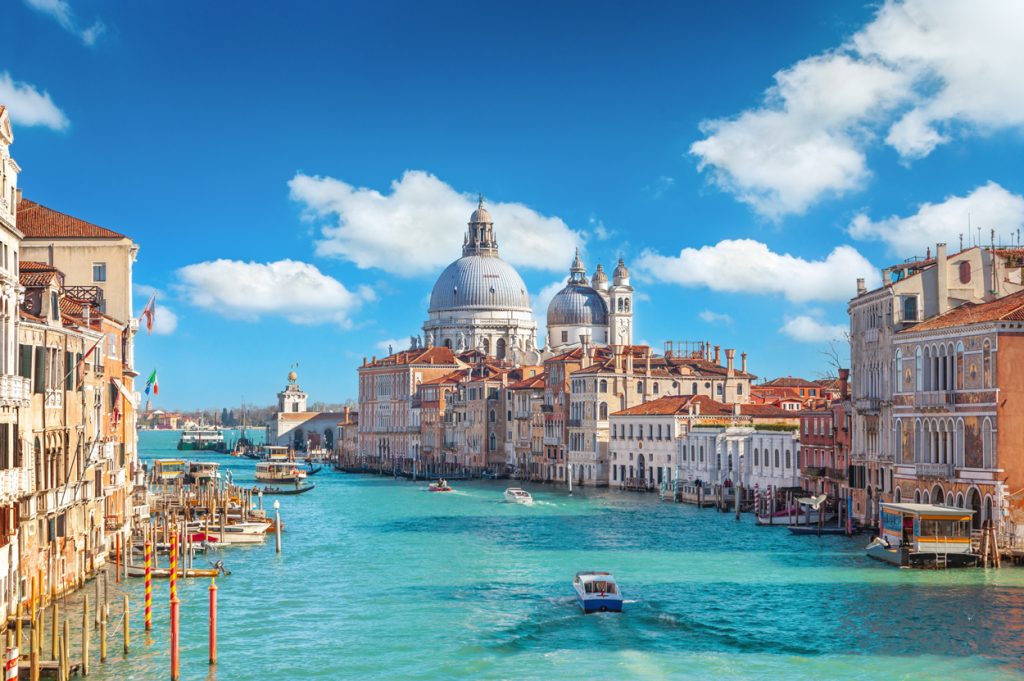
Venice sits on the Adriatic coast of the Veneto region, spread across 118 small islands inside a shallow lagoon. It is one of the most visited places in Italy, built almost entirely around water, with the Grand Canal, Piazza San Marco, and the Doge’s Palace drawing travellers from across the world. Its historic centre is a UNESCO World Heritage Site, and its appeal is immediate: no cars, no scooters, just boats and footbridges connecting a city that has looked broadly the same for centuries.
Treviso sits about 30 kilometres north, also in Veneto, and shares more with Venice than most visitors expect. Locals call it “Little Venice” because two branches of the Sile and Cagnan rivers run straight through its old town, past arcaded streets and medieval walls. What sets it apart is scale and pace: Treviso is a working provincial capital, not a tourist set piece, so it stays quiet even in August. It is also the birthplace of tiramisù and the gateway to the Prosecco hills around Conegliano and Valdobbiadene, themselves a UNESCO wine landscape a short drive further north.
The two cities make sense together precisely because they are close but different. Travellers fly into Treviso instead of Venice’s own Marco Polo airport largely because low-cost carriers price the route lower, then use the roughly 30-kilometre hop to reach the lagoon. Others do it in reverse: basing themselves in Treviso for a quieter, cheaper stay and taking a short day trip into Venice, avoiding the access fee and crowding that now affect peak-season visits to the historic centre. Either direction, the connection between the two is less about distance and more about matching the right city to the right part of the trip.
Venice-to-Treviso Layout: where you start and where you’re headed
Treviso Airport sits about 25 kilometres north of central Venice, in the Sant’Angelo district, roughly 3 kilometres from Treviso’s own town centre. It is a compact, single-terminal airport built for the low-cost model, with arrivals on the ground floor and departures one level up. That layout matters on the way out: the drop-off point and the check-in desks are close together, so once you are through the door you are minutes from security.
The starting point in Venice matters just as much. If you are staying in the historic centre, your journey begins with a walk to Piazzale Roma or a vaporetto ride to Tronchetto, the island where cars, buses and the airport shuttles all connect. If you are in Mestre, on the mainland, you skip that first leg entirely and join the route directly from Mestre railway station. Two travellers staying a few kilometres apart can have very different door-to-door times for what looks, on a map, like the same trip.
What travellers underestimate
The most underestimated part of this trip is not the bus, it is the walk and the water before it. Guides quote the 40-minute Tronchetto-to-airport ride as the whole journey, but for anyone staying near Rialto or San Marco, reaching Tronchetto in the first place can take another 30 to 45 minutes once you count the vaporetto and the walk to the stop. Build that into your morning rather than discovering it while checking a departure board. Fare variation by day is the second underestimated factor: direct bus prices on this corridor move with demand, and early-week departures are consistently cheaper than midweek ones, so booking a few days ahead usually beats a same-day purchase.
Travellers also rarely plan the Venice side of the trip as carefully as the airport side. A short, free audio-guided walk through the city before you leave, offered to Terravision passengers through the VoxCity app, is a way to use a spare hour before departure instead of waiting at the stop with nothing to do.
FAQ
Is the direct bus really the cheapest way from Venice to Treviso Airport?
Not always, and it depends on what you value. The genuinely cheapest option on paper is a local bus to Treviso Centrale station followed by a short train, which can come in a few euros below a direct ticket, but it adds a transfer with luggage and roughly 20 to 30 extra minutes. That erodes the saving if your flight is early or you are carrying bags. The direct bus from Tronchetto, run by operators including Terravision, tends to offer the better balance of price and reliability for most travellers, particularly on morning departures where a missed connection has real consequences.
What happens if my outbound bus is delayed or I miss the one I booked?
Delays are common enough on this corridor that most direct bus tickets are built to absorb them. A ticket bought for a specific departure typically remains valid for the next available bus if your flight or connection is delayed, so there is no need to rebook or pay a change fee. What is worth avoiding is the reverse scenario: cutting your timing so close that a delayed vaporetto leaves no buffer before your booked slot. Building in 15 to 20 minutes of slack, rather than the strict minimum, is what actually protects your flight, not the ticket’s flexibility alone.
How much earlier should I leave central Venice compared with someone already staying in Mestre?
Meaningfully earlier, and it is worth quantifying rather than guessing. Someone in Mestre can walk to the station stop and join the direct bus with almost no buffer beyond normal punctuality. Someone in the historic centre needs a vaporetto ride to Tronchetto, running every 10 to 20 minutes depending on the line and time of day, plus the walk to the water bus stop, which in areas like Cannaregio or Castello can itself take 15 to 20 minutes. Budget 45 minutes to an hour more from central Venice than the headline bus journey time suggests, especially for an early flight when the first services are not yet at full frequency.
Explore Venice airport transfers

 Rides approx every 60 mins
 Journey time: 40 mins
 Free Luggage
 No Booking fee