EN
EN
 Italiano
  Deutsch
  Français
  Español
  Polski


Heathrow Airport: the complete terminal guide
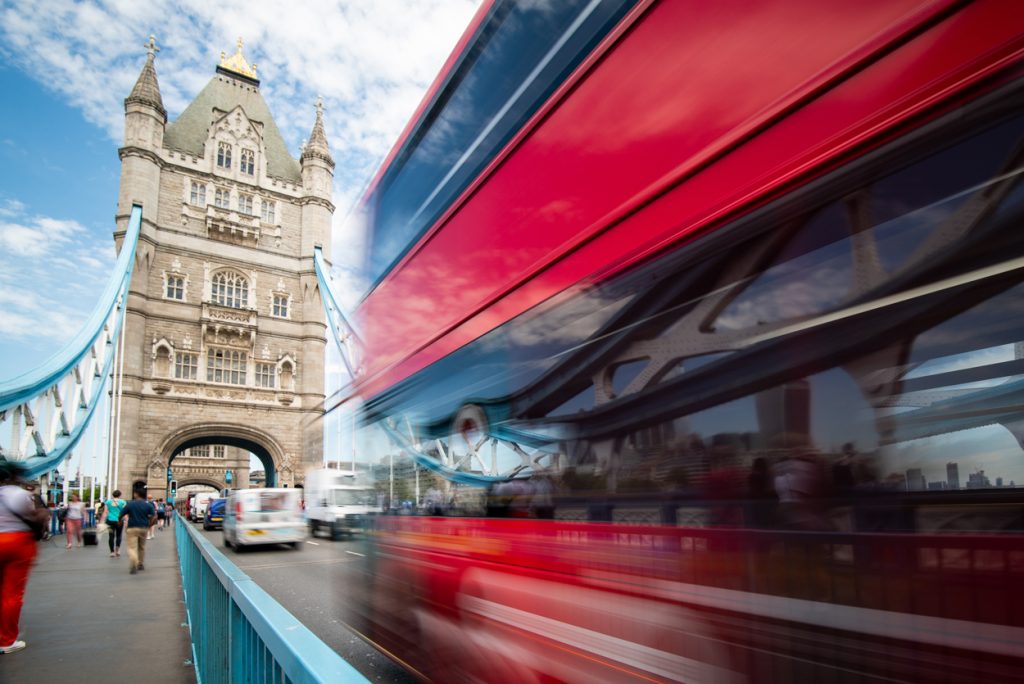
Heathrow’s terminal numbering confuses people before they even arrive, because Terminal 1 no longer exists. It closed in June 2015 and was demolished to make way for Terminal 2’s expansion, so the airport now runs T2, T3, T4 and T5, in roughly that order from east to west. The terminals are grouped by airline alliance rather than by destination or airline size, which means the terminal that matters to you depends entirely on who you are flying with, not where you are going.
Why Heathrow airport’s terminal numbers skip from nothing to 2
The old Terminal 1 opened in 1968 and was retired once the current Terminal 2, nicknamed the Queen’s Terminal, opened on the same site in June 2014. Its airlines moved into T2, and the building itself was torn down over the following years. If you are looking at an old boarding pass, a guidebook, or a search result mentioning Terminal 1, treat it as out of date. Every airline that used to fly from it now operates out of T2.
Which terminal for which airline
Heathrow terminal 2: the Star Alliance hub
Terminal 2 handles around 25 carriers, almost all Star Alliance members: Lufthansa, United Airlines, Air Canada, Singapore Airlines, ANA, Swiss, Austrian, Turkish Airlines, SAS and Air China among them. Air India moved here in 2025 to join the alliance’s other carriers. A handful of non-aligned airlines also use T2, including Aer Lingus and Icelandair. The building splits into the main T2A hall and the airside satellite T2B, connected by an 800-metre underground walkway.
Heathrow terminal 3: oneworld, Virgin Atlantic, Emirates
Terminal 3 is one of Heathrow’s older buildings and covers most of the oneworld alliance, excluding British Airways, plus Virgin Atlantic and Emirates. American Airlines, Cathay Pacific and Japan Airlines all check in here. It handles a heavy long-haul load and can feel dated compared with T2 and T5, though it remains one of the busiest terminals at the airport.
Heathrow terminal 4: SkyTeam and the Gulf carriers
Terminal 4 sits apart from the main T2/T3/T5 cluster, on the airport’s southern perimeter, and is not connected to the others by foot. It is Heathrow’s SkyTeam hub, with Air France, KLM and other SkyTeam members, plus Qatar Airways and Etihad. A small group of oneworld carriers also check in here rather than T3, including Malaysia Airlines and Royal Air Maroc. Because of its separate location, allow extra time if a connection routes you through T4.
Heathrow terminal 5: British Airways and Iberia only
Terminal 5 is British Airways’ exclusive base at Heathrow and also handles Iberia. It is the largest single building at the airport, split into the main T5A hall and the satellite concourses T5B and T5C, reached by an internal transit train. If your flight number starts with BA, this is almost always your terminal, though it is worth double-checking codeshare bookings, since the marketing carrier on your ticket is not always the one operating the flight.
Moving between terminals: what actually works
Heathrow connects its terminals two ways: rail and road. The Elizabeth Line and Heathrow Express both serve T2/T3, T4 and T5 directly, and travel between any two Heathrow stations is free as long as you stay airside within the airport boundary. A free inter-terminal coach also links the terminals by road, taking around 15 minutes between T4 and the central T2/T3 area. Allow 30 to 45 minutes for a full transfer between terminals, including the walk to check-in at the other end. For anyone arriving by taxi or a booked transfer rather than transferring between flights, the terminal question is simpler: Terravision runs coaches from Heathrow direct to central London, as well as a direct service between Heathrow and Gatwick, so the pickup point is fixed to the correct terminal from the outset rather than something to figure out on arrival.
Timing comparison: connecting within a terminal vs across terminals
A connection within the same terminal, T5 to T5 on two British Airways flights for example, needs the standard security and walk buffer, typically 60 to 75 minutes for international connections. Moving between terminals adds the rail or coach transfer on top, which pushes the realistic minimum to 90 minutes for most combinations and closer to two hours if Terminal 4 is involved, given its separate location. Long-haul arrivals connecting to a short-haul departure in a different terminal are the tightest case, since immigration and security both have to be cleared again unless the itinerary is fully through-checked.
Practical planning for Heathrow
- Check the terminal on your boarding pass close to departure, not just at booking. Airlines occasionally shift terminals, and Air India’s 2025 move to T2 is a recent example.
- If connecting through Heathrow on separate tickets rather than one itinerary, treat it as leaving the airport and starting again: collect bags, exit, and re-enter security at the new terminal.
- Terminal forecourts charge a drop-off fee for private vehicles, enforced by number-plate cameras, since January 2026. A pre-booked transfer typically includes this in the fixed price rather than charging it separately on arrival.
- Terminal 4’s separate location means it is the one to double-check twice if you are unfamiliar with Heathrow, since it is the only terminal not walkable from the central T2/T3 cluster.
What travellers consistently get wrong
The most common mistake is assuming Heathrow works like a single building with numbered gates, the way many smaller European airports do. It does not. Each terminal is effectively a separate airport with its own check-in, security and set of airlines, and stepping into the wrong one costs a genuine 30 to 45 minute detour to fix. The second mistake is underestimating Terminal 4’s isolation. Passengers connecting from T2 or T3 sometimes assume a short walk will do it; it will not, and the transfer needs the rail or coach link every time.
FAQ
Is there still a Terminal 1 at Heathrow?
No. Terminal 1 closed in June 2015 and has since been demolished. Its airlines relocated mainly into the newly built Terminal 2, and any reference to Terminal 1 in an older guide, article or boarding pass template should be treated as outdated. Heathrow currently operates four terminals: 2, 3, 4 and 5.
How do I know which terminal my flight uses?
The most reliable method is your boarding pass or e-ticket, since it reflects the current assignment rather than a general rule. Heathrow’s own website also has a lookup tool by airline and flight number. As a rough guide, T2 covers Star Alliance, T3 covers oneworld minus British Airways plus Virgin Atlantic and Emirates, T4 covers SkyTeam and the Gulf carriers, and T5 is British Airways and Iberia exclusively, but airlines do move between terminals occasionally.
How much time should I allow to transfer between two Heathrow terminals?
Budget 30 to 45 minutes for the transfer itself using the Elizabeth Line, Heathrow Express or the free inter-terminal coach, on top of the standard security and walk time at the new terminal. If Terminal 4 is one end of the transfer, add extra time, since it sits apart from the other three and the connection takes longer by road than the rail link between T2, T3 and T5.
Explore London airport transfers
 Journey time: 50 mins

 Rides approx. every 30mins
 6 intermidiate stops
 Free luggage
 No Booking fee
Luton to Central London: every route compared
September 8, 2026
London Luton Airport: The One-Terminal Guide
September 1, 2026
Which London airport is closest to the city centre?
September 1, 2026
Trooping the Colour 2026: how to reach London without getting stuck
June 17, 2026
Getting to Wimbledon 2026 – transport and travel guide
May 20, 2026
Hidden spots in London most tourists miss
March 31, 2026
Cultural events in London: a travel and planning guide
March 25, 2026
Best Attractions in London: 10 Must-See Places
March 17, 2026
Travelling to London : what to do in every season
March 11, 2026
Arriving at Stansted Airport: your first hour in London
March 9, 2026
How many terminals are there at stansted airport?
March 3, 2026